We had a wonderful time judging the 2026 Shortbread Contest on Saturday, August 1st this year at the 177th Annual St. Andrew’s Highland Games, at Historic Greenmead Park, in Livonia, MI
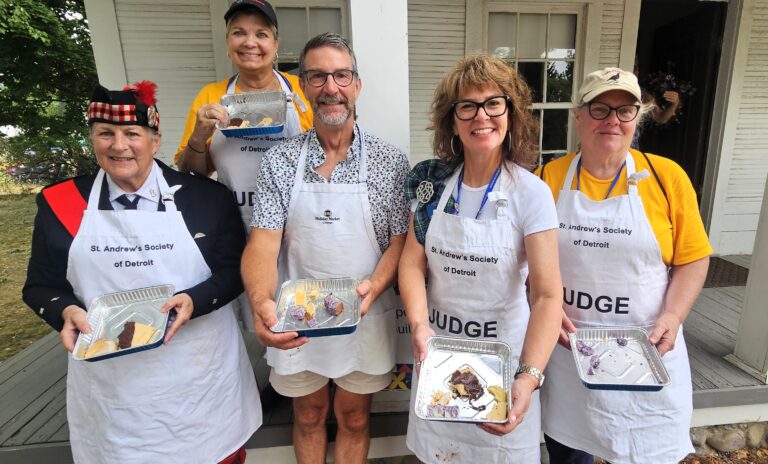
Thank you to the Judges’ Panel: (Pictured left) 2026 Judges: Christy Haradean (Chair), Monika Klik, Kevin Nixon, Kelly Hemmerling, and Karen Wood
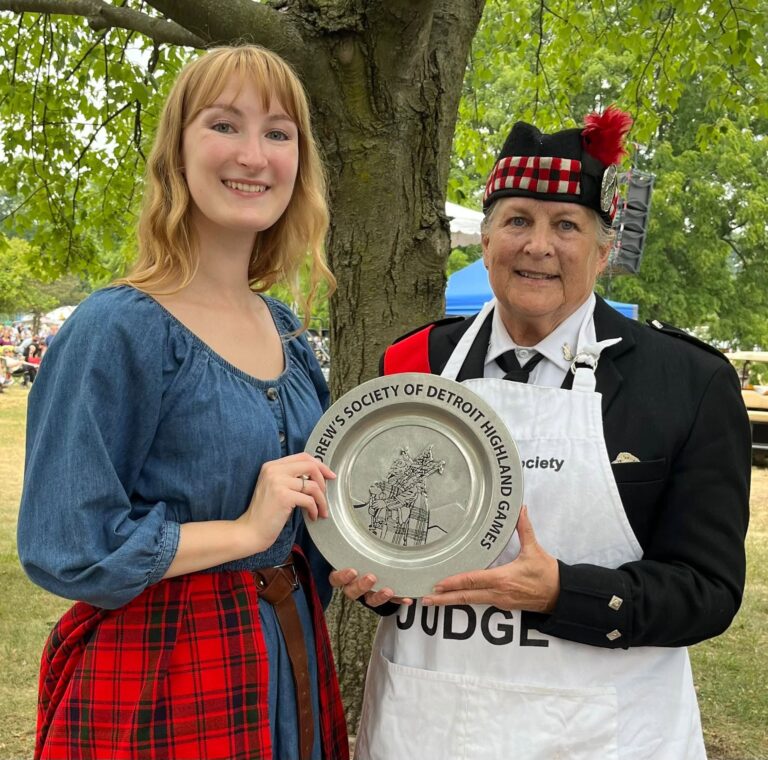
Madison Roberts and Shortbread Contest Chair, Christy Haradean
And here are the Sweet results:
In 3rd place is: Jessica Brunell
In 2nd place is: Shirley Davidson
And Congratulations to our… 1st Place 2026 Winner: Madison Robertson
Here is: Madison’s Award-Winning Recipe for her Shortbread…
Ingredients:
1 Pound Softened Butter
1 Cup Brown Sugar (Packed)
4 to 4-1/2 Cups Flour Optional: Dark Chocolate Morsels, Sea Salt
Instructions:
Cream Butter & Brown Sugar. Add 3 & 3/4 Cups Flour & mix well.
Flour board with remaining Flour. Knead for 5 Minutes, adding remaining flour to make a soft, non-sticky dough.
Roll to 1/2” thickness. Cut into 3×1” Strips. Place 1” apart on ungreased baking sheets. Prick with Fork.
Bake at 325° for 20-25 minutes or until cookies are lightly browned.
Optional Step: Melt Dark Chocolate Morsels and dip or spoon the liquid to cover 1/2 the cookie. Place on parchment paper. Sprinkle Sea Salt on wet Chocolate. Place in Fridge to solidify Chocolate.
Yield: about 4 Dozen
The History of Shortbread
Shortbread was an expensive luxury and for ordinary people, shortbread was a special treat reserved for special occasions such as weddings, Christmas, and the New Year. In Shetland, it was traditional to break a decorated shortbread cake over the head of a new bride on the threshold of her new home. The custom of eating shortbread at the New Year has it’s origins in the ancient pagan Yule Cakes which symbolized the sun. In Scotland, it is still traditionally offered to “first footers” at the New Year.
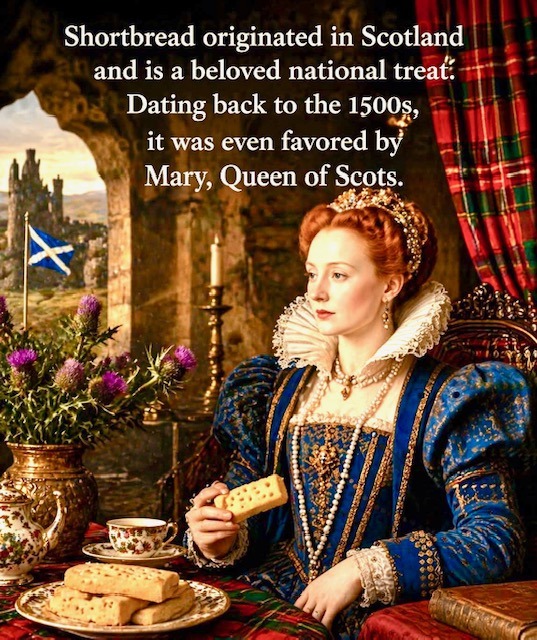
Shortbread has been attributed to Mary, Queen of Scots, who in the mid-16th century was said to be very fond of Petticoat Tails, a thin, crisp, buttery shortbread originally flavoured with caraway seeds.
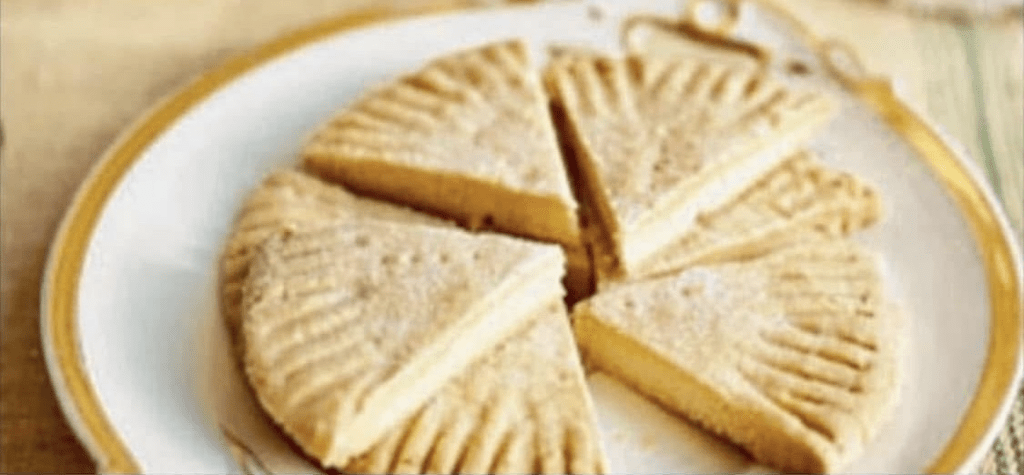
There are two theories regarding the name of these biscuits. It has been suggested that the name “Petticoat Tail” may be a corruption of the French petites galettes (“Little Cakes”). However these traditional Scottish shortbread biscuits may in fact date back beyond the 12th century. The triangles fit together into a circle and echo the shape of the pieces of fabric used to make a full gored petticoat during the reign of Elizabeth I. The theory here is that the name may have come from the word.
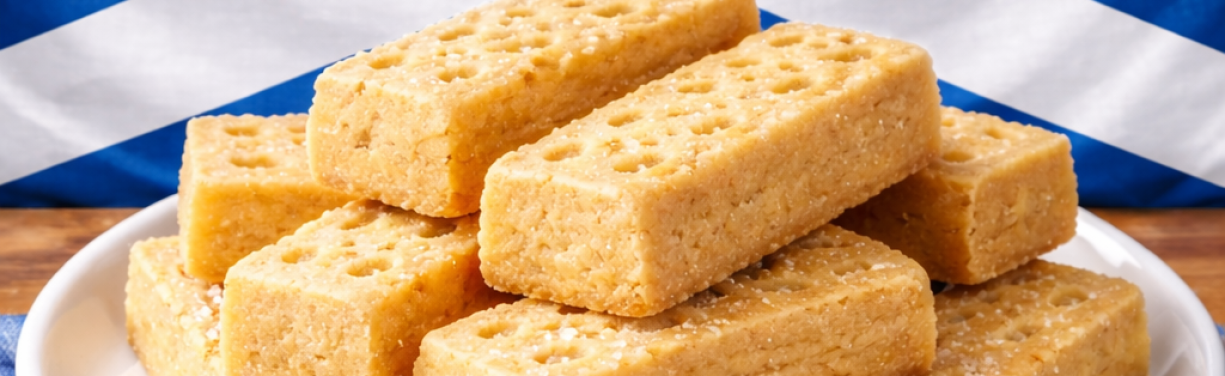
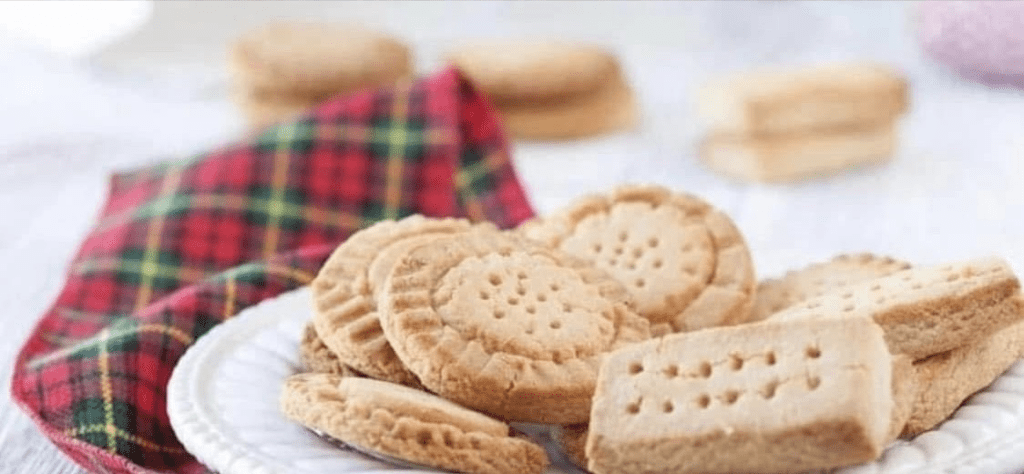
Shortbread is traditionally formed into one of three shapes: one large circle divided into segments (“Petticoat Tails”); individual round biscuits (“Shortbread Rounds”); or a thick rectangular slab cut into (“Fingers”.)